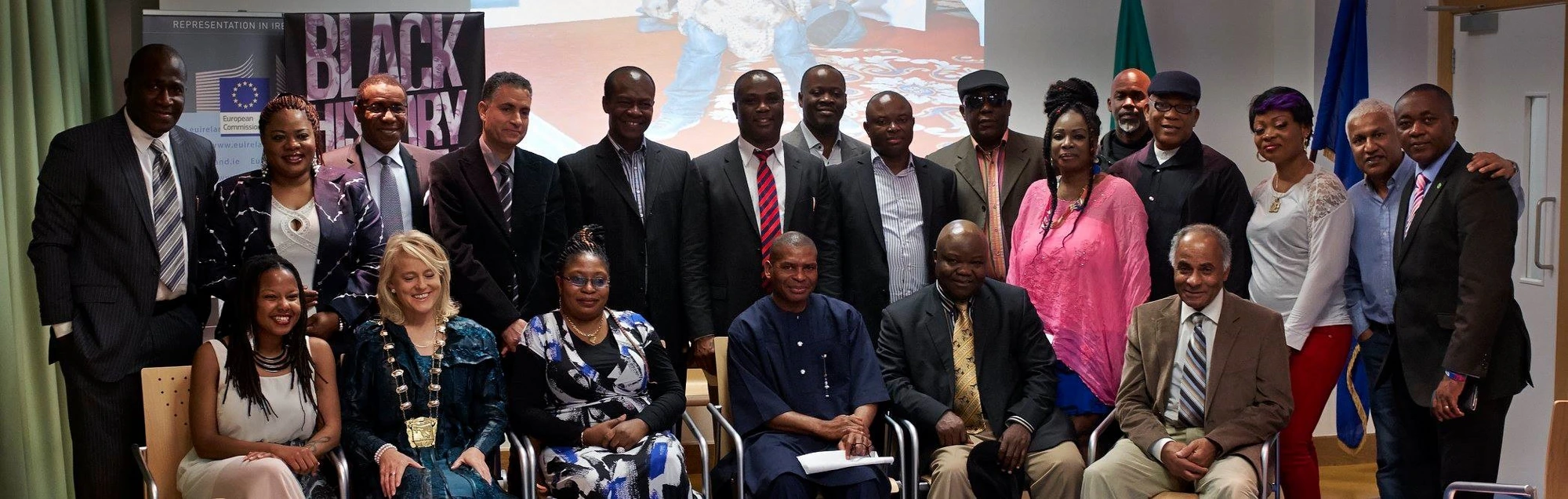
Ireland Becomes Fourth Country to Celebrate Black History Month

Ireland has become the fourth country in the world to celebrate an annual Black History Month, following in the footsteps of the US, UK and Canada.
A network of groups came together through the Africa Irish Development Initiative (AIDI) to organise a series of events taking place throughout the month of October. What began as a pilot initiative in Cork in 2010 has grown into a national programme.
Zephrynus Okechi Ikeh, Project Coordinator of Black History Month Ireland (BHMI), said the initiative tackles racism and discrimination by helping people understand different cultures.
The theme of BHMI 2014 was ‘Civil Rights, Ethnic Diversity, Intercultural Education and Development’.
Ikeh, who is originally from Nigeria but has lived in Ireland for over seven years, said the month would “honour the men, women and children at the heart of this celebration — from doctors to professionals to educators to school children to asylum seekers.”
He believed the time was right for Black History Month in Ireland, as the Irish community had evolved greatly in recent years through immigration — and he called on the Government of Ireland to officially recognise BHMI, so that more organisations, schools and libraries would take part.
The annual programme included musical and cultural performances, lectures at several universities, religious services, and African art & craft, music performance, film, a food festival, and African material fashion.
More than a decade on, that call continues through AIDI’s work — from the UnityStream Erasmus+ programme to the national Black & African History Month observance. — From coverage of the 2014 national launch.

“Honour the men, women and children at the heart of this celebration — from doctors to professionals to educators to school children to asylum seekers.”
Zephrynus Okechi Ikeh